
Belgium · Working-time registration · Updated October 2026
Belgium: working-time registration becomes mandatory. Are you ready?
Synel equips Belgian companies for mandatory working-time registration: clocking terminals installed wherever people work (office, workshop, warehouse, shop or construction site), software that keeps every entry and exit, and a direct export to payroll. We design both the hardware and the software ourselves, and our terminals can also be offered under a Belgian partner’s own brand.
- 1 April 2027 Check in and out at Work on sites worth €500,000 or more
- 157 days until it comes into force
- €8,000 maximum fine per worker in cleaning

This concerns every company. Belgium is preparing a working-time registration obligation for all employers, targeted for 2027. Some sectors are already covered: cleaning since 2024, and construction sites worth €500,000 or more from 1 April 2027.
Who is covered
- In force
Cleaning
In-and-out registration since 1 September 2024
- In force
Meat sector
Covered by Checkinatwork
- 1 April 2027
Construction sites of €500,000 or more
Construction works and delivery of ready-mixed concrete
- Targeted for 2027
All companies
Announced by the government, not yet voted
Check in and out at Work
What the law says
The programme law of 30 May 2026 (Belgian Official Gazette, 1 June 2026) replaces “Check in at Work” with “Check in and out at Work”. The ONSS has postponed its entry into force from 1 January to 1 April 2027.
The cleaning sector has applied in-and-out registration since 1 September 2024, with fines of up to €8,000 per worker. The meat sector is also covered by Checkinatwork.
- Point
- What changes on 1 April 2027
- Activities covered
- Construction works and delivery of ready-mixed concrete
- Threshold
- Sites with a total value of €500,000 excl. VAT or more
- Who registers
- Each worker, employee or self-employed, themselves
- When
- In real time, on arrival and at the end of the work, breaks included
- How
- Badge provided by the contractor, or QR code
- No longer allowed
- Advance or remote registration by the employer
Timeline
From the EU ruling to 1 April 2027
- 2019
Ruling of the Court of Justice of the European Union: every Member State must require a system that measures daily working time.
- 1 September 2024
The cleaning sector applies in-and-out registration.
- Late November 2025
The government announces the general obligation for all companies.
- March 2026
Draft bill submitted to the National Labour Council.
- 30 May 2026
Programme law: “Check in at Work” becomes “Check in and out at Work” (Belgian Official Gazette, 1 June 2026).
- 1 January 2027
Date targeted by the draft bill for the general obligation, not yet voted.
- 1 April 2027
In force on construction sites worth €500,000 or more, and end of the transition period targeted for all companies.
What about other sectors?
The general obligation for all companies has not yet been voted. The government announced it in late November 2025, and a draft bill was submitted to the National Labour Council in March 2026. It targets 1 January 2027, with a transition period until 1 April 2027.
It stems from a 2019 ruling of the Court of Justice of the European Union: every Member State must require employers to have a system that measures daily working time. The expected criteria are known:
-
Objective
It records the time actually worked, with no unilateral manipulation.
-
Reliable
Data cannot be changed without a valid reason.
-
Accessible
Labour inspectors and the worker can consult it.
Employers
What this means for employers
Whatever the sector, the system chosen will have to be objective, reliable and accessible. On construction sites, the law accepts badges and QR codes, but employers do not have to provide a smartphone. Everywhere, a fixed terminal at the workplace lets everyone clock in, phone or no phone, and provides the strongest proof of presence.
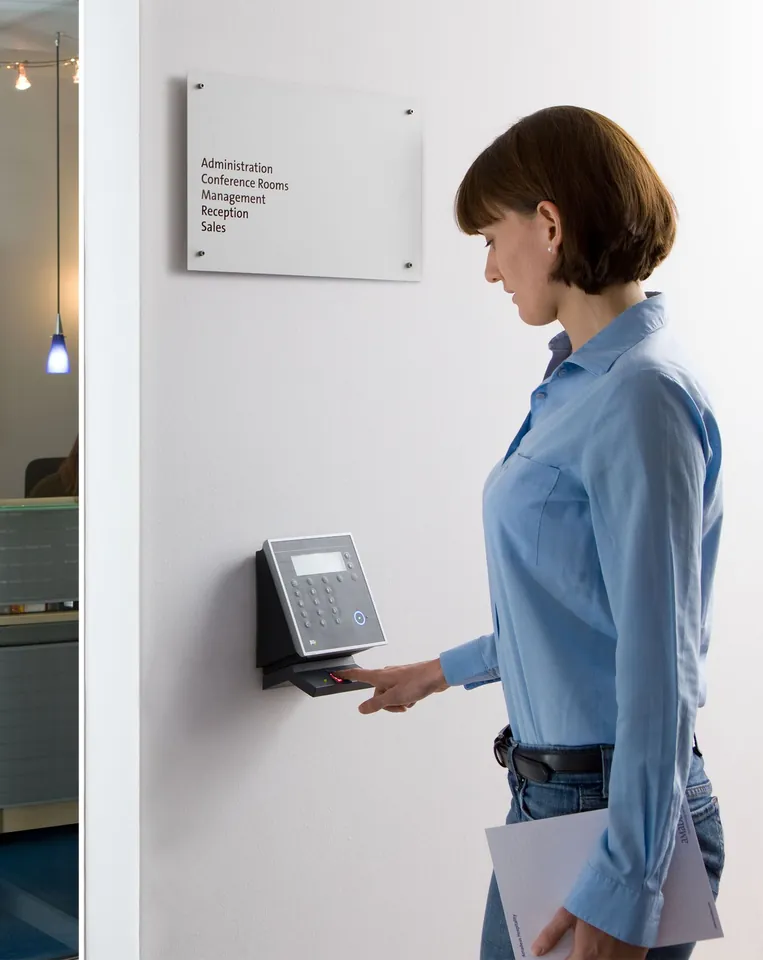
In practice, employers need:
- 01
A clocking point at every workplace (office, workshop, warehouse, shop or construction site), usable by everyone, with or without a phone.
- 02
A time-stamped record of entry and exit that nobody can alter afterwards.
- 03
Data flowing to payroll and to declarations, with no re-keying.
- 04
A history that inspectors and workers can consult at any time.
Synel
Why Synel is best placed
Synel designs both its terminals and its software. That is what allows us to meet the law end to end, from the badge at the workplace to the payroll export.
Three strengths make the difference
One point of contact.
Hardware, software and support come from the same engineering team, with no subcontractors. Our latest Synergy terminals are updated, diagnosed and fixed remotely, usually while the customer is still on the call.
15 years of terminals built for partners.
With the “Powered by Synel” programme, a Belgian software vendor or integrator can offer our terminals under its own brand, with our SDK.
International experience.
Synel operates in more than 34 countries and knows local time-and-attendance rules, including those governing the use of biometrics.

Prepare for April 2027 now
Construction sites must be ready by 1 April 2027, and the general obligation targets the same period for all companies. Rolling out terminals takes a few weeks, so it is best to start now.
Are you an employer, a social secretariat, a software vendor or an integrator in Belgium? Contact our team for a demo or to explore a white-label partnership.
Frequently asked questions
Is working-time registration already mandatory in Belgium?
For construction sites worth €500,000 or more and the delivery of ready-mixed concrete, yes, from 1 April 2027 under Check in and out at Work. The cleaning sector has been covered since 1 September 2024 and the meat sector falls under Checkinatwork. A general obligation for all employers has been announced for 2027 but had not yet been voted as of October 2026.
What changes between Check in at Work and Check in and out at Work?
Workers must now register both their arrival and their departure, in real time and breaks included, with a badge provided by the contractor or a QR code. Advance or remote registration by the employer is no longer allowed.
Does the employer have to give every worker a smartphone?
No. The law accepts badges and QR codes, and a fixed terminal at the workplace lets everyone register, with or without a phone.
What must a compliant registration system do?
The criteria expected in the draft general law are that it is objective (it records the time actually worked, with no unilateral manipulation), reliable (data cannot be changed without a valid reason) and accessible (inspectors and the worker can consult it).
Is the employer liable if a worker forgets to register?
If a compliant system is in place, the employer is not liable for workers who forget or refuse to register. That is why the choice of system matters.